



Antibodies from Ebola survivor protect mice and ferrets against related viruses

image2.png

Read about how our NIAID-funded study could lead to broad, versatile treatments for many different Ebolaviruses.

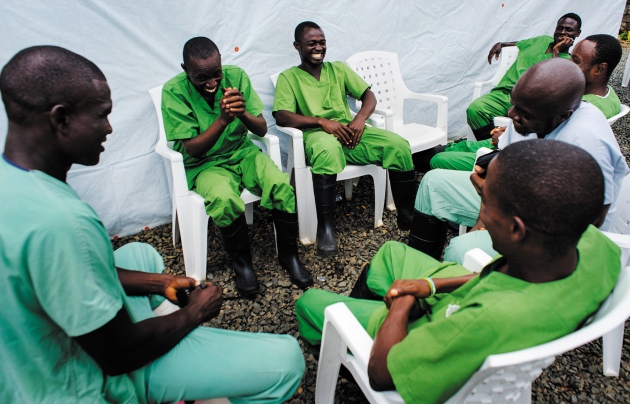
Researchers funded in part by the National Institute of Allergy and Infectious Diseases (NIAID), part of the National Institutes of Health (NIH), have studied the blood of an Ebola survivor, searching for human antibodies that might effectively treat not only people infected with Ebola virus, but those infected with related viruses as well. Now the researchers have identified two such antibodies that hold promise as Ebola treatments.

How to turn competitors into collaborators

Commentary in Nature highlights the power of cross-institutional collaborations and lessons learned by the team as they make headway on finding better treatments for Ebola virus infection. The Chandran Lab is an integral part of the Viral Hemorrhagic Fever Immunotherapeutic Consortium, contributing key functional assays that characterize neutralization activity of monoclonal antibodies and help predict their therapeutic potential. 

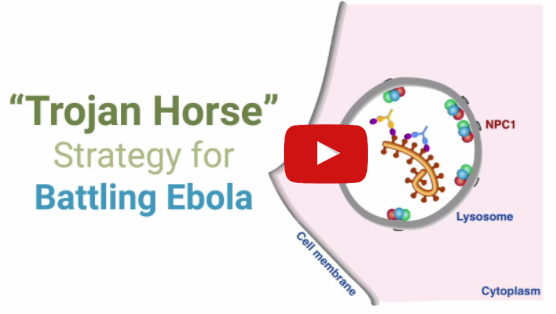
New 'Trojan Horse' Antibody Strategy Shows Promise Against All Ebola Viruses

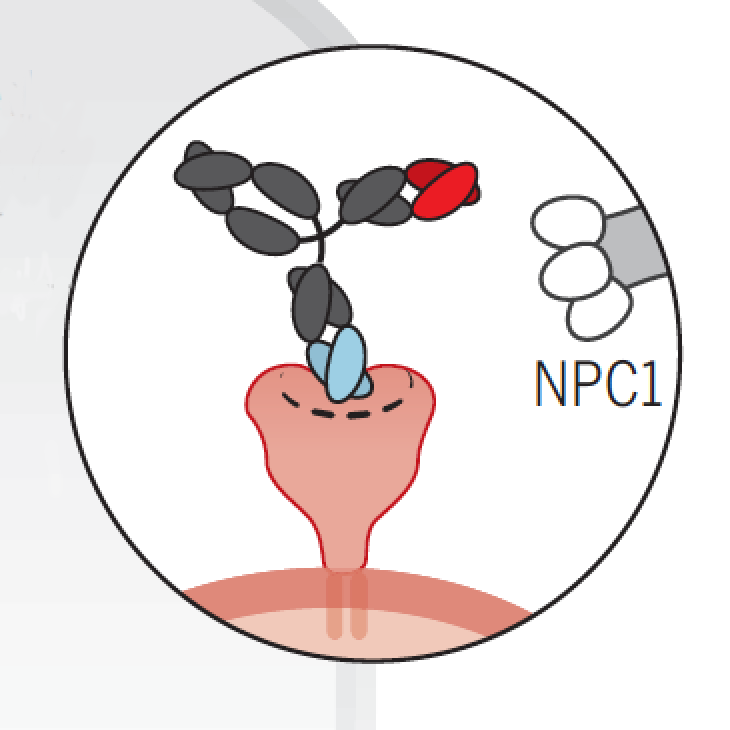
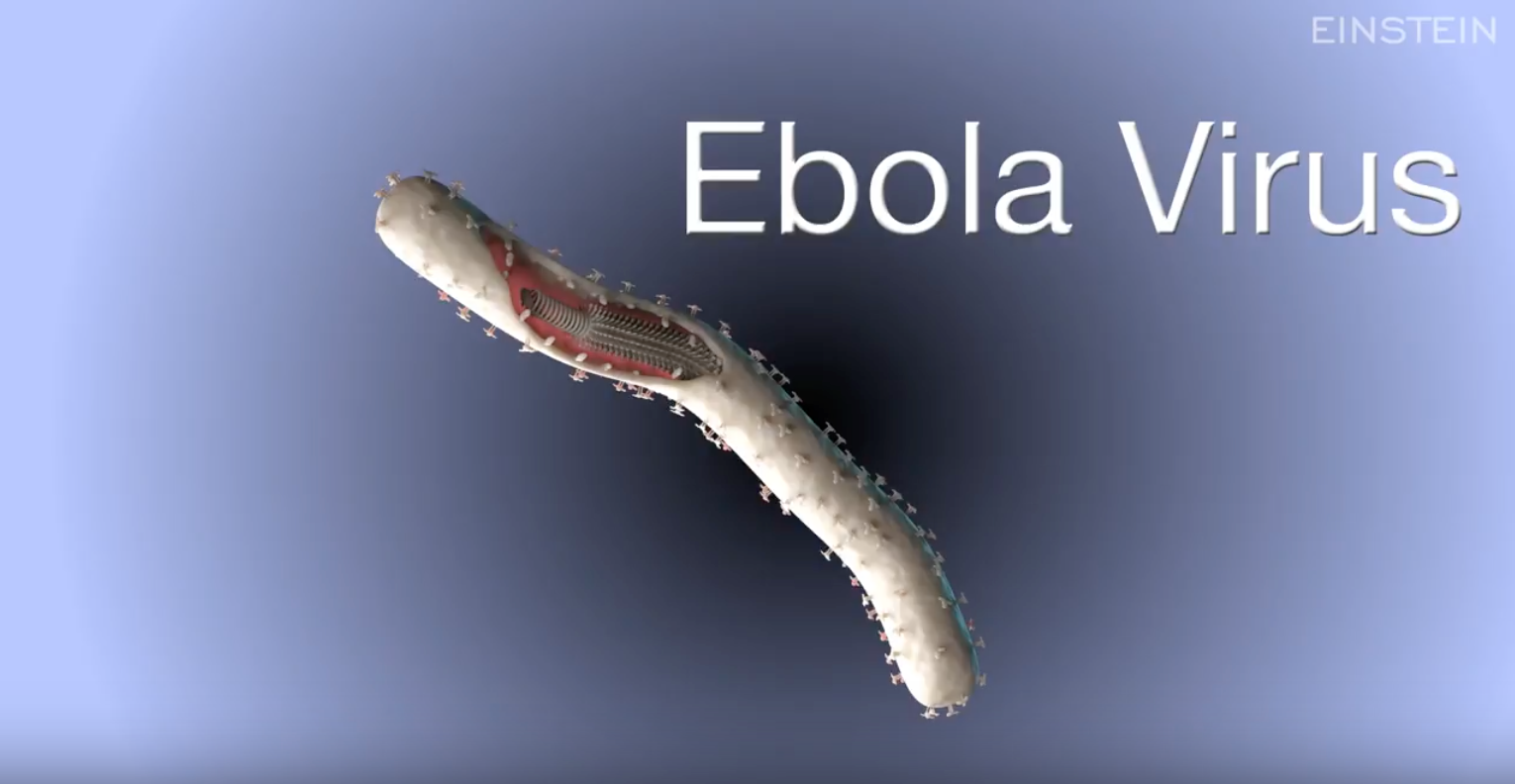
In our new paper in Science, we describe a new therapeutic strategy to target a hidden Achilles’ heel shared by all known types of Ebola virus. This strategy relies on our development of unique bispecific antibodies that like the mythical "Trojan horse," trick Ebola into carrying the means of its own destruction into host cells. See the press release here and a perspective on our work published in Science here.

Led by Anna Wec in the lab (Team).

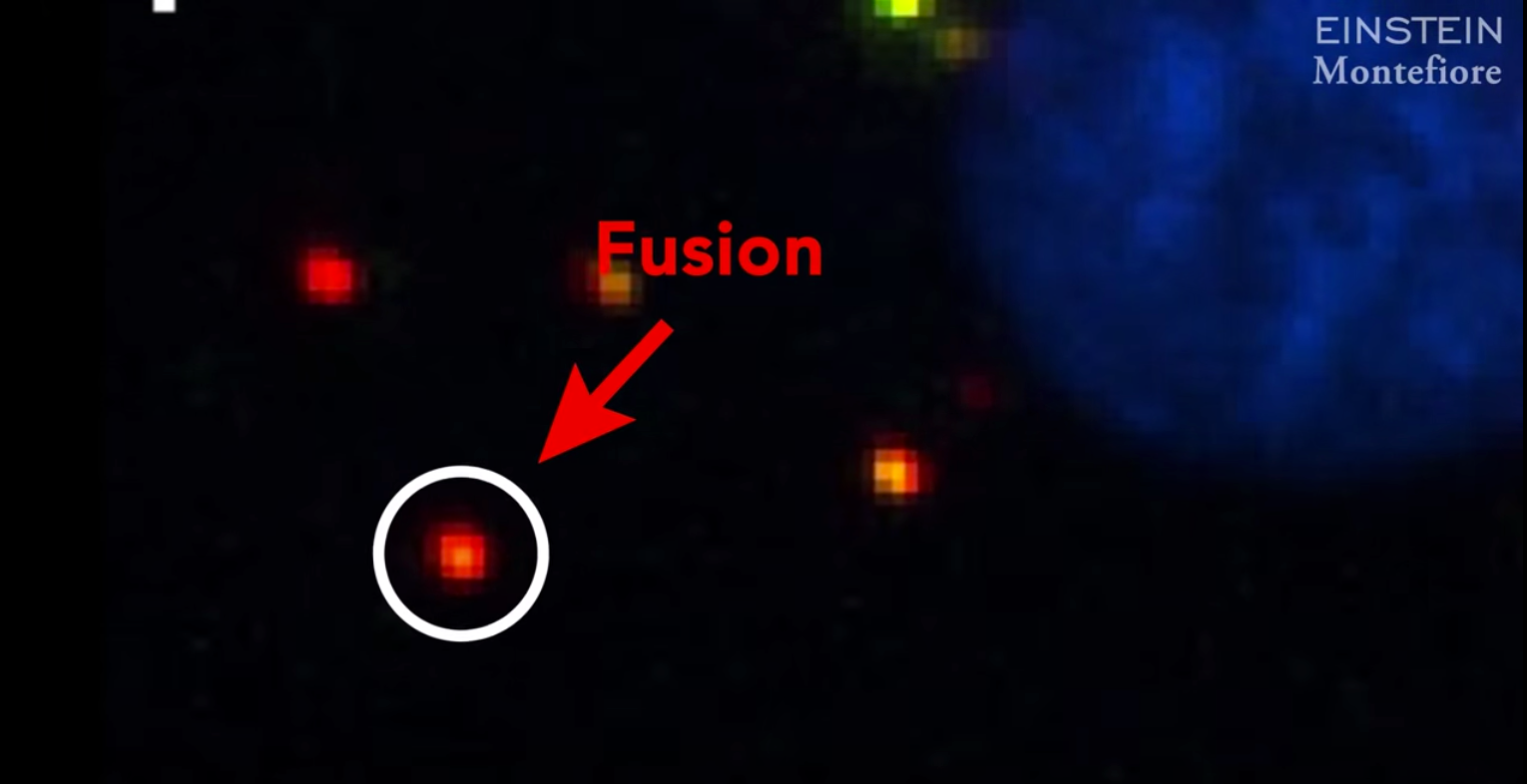
Fatal Attachment: Watch the Ebola virus fusion machine in action inside a human cell

Like a Trojan horse, Ebola virus sneaks into a human cell by hiding out inside lysosomes. In order to escape from the lysosome, the virus must then fuse its membrane with the membrane of the lysosome. Live imaging captures this moment of fusion in brilliant color. Images by Chandran Lab postdoctoral fellow, Dr. Jennifer Spence.

Understanding the Ebola virus

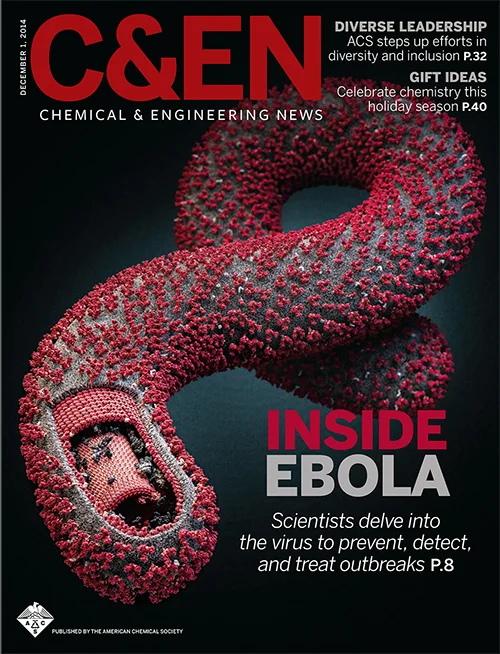
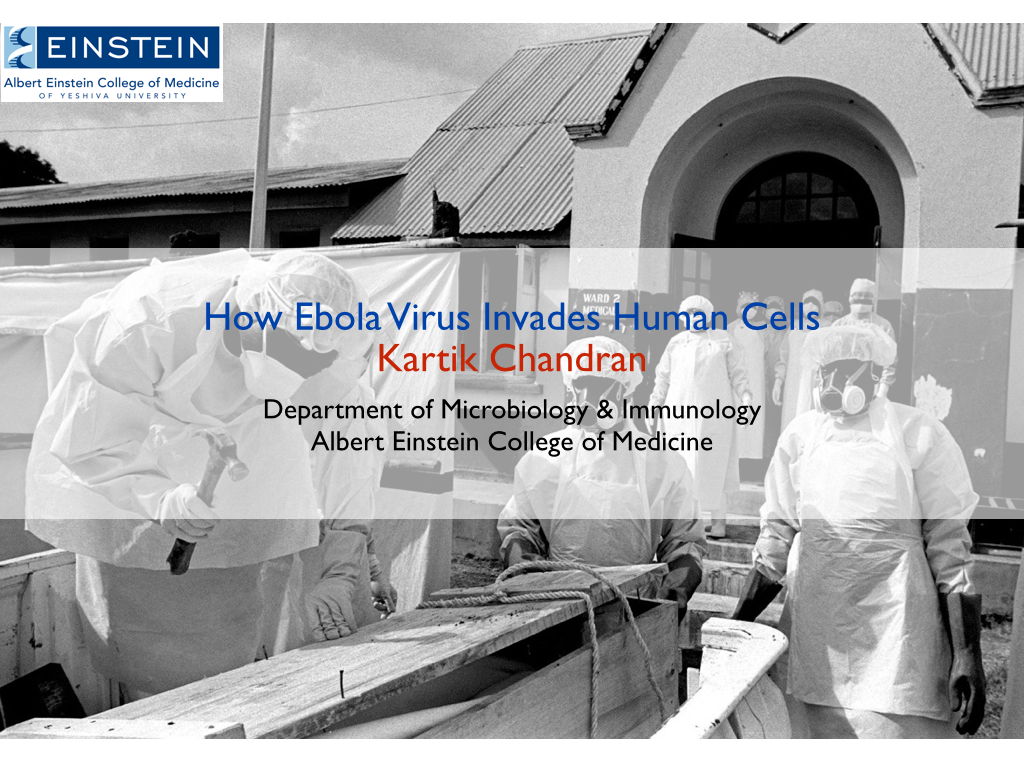
The Ebola epidemic in west Africa has highlighted the threat of emerging infectious diseases to public health. In this Nature.com webcast (registration required), Kartik outlines the importance of basic molecular research to understand how Ebola enters human cells, and why such research has been key to developing drugs and vaccines. Dr. Simon Hay (University of Oxford) also explains how mapping and modeling can help identify where are the places where Ebola and other emerging diseases risk jumping from animals to people. Watch the video (Kartik's talk only, 21 minutes).

Seminar at The Ebola Forum, Rutgers University

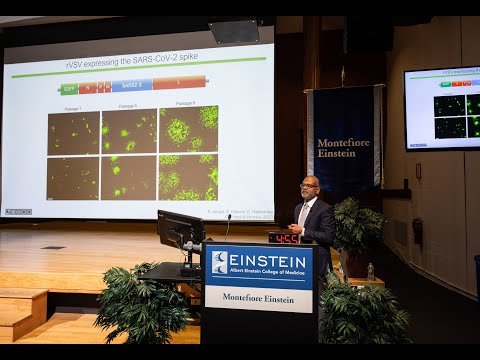
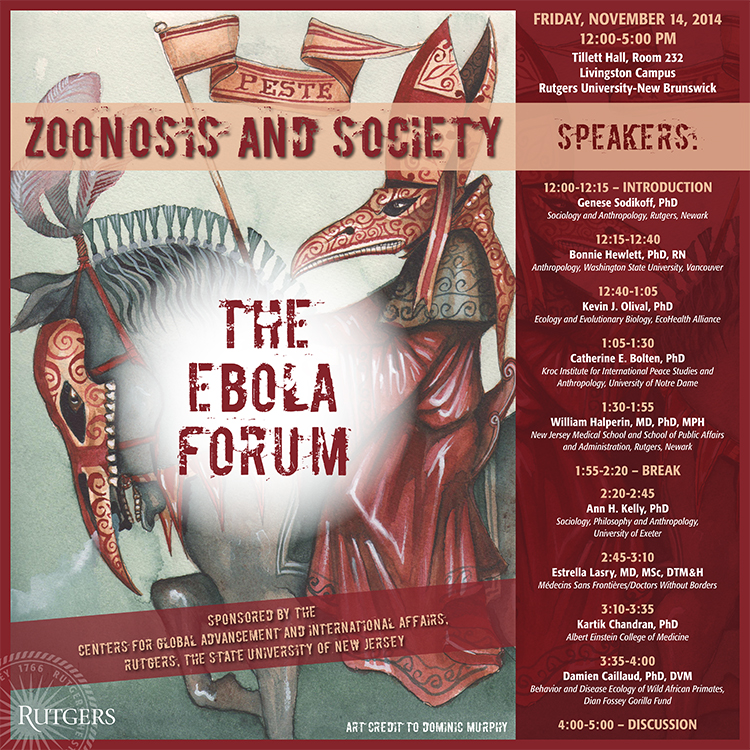
Kartik spoke at this symposium organized by the working group, "Zoonosis and Society: Interdisciplinary Perspectives of Animal-to-Human Disease" at Rutgers University. Its goal was to integrate the diverse perspectives of sociologists, anthropologists, epidemiologists, ecologists, clinical researchers, and molecular virologists on the Ebola outbreak in West Africa. Watch the video of Kartik's talk (34 minutes).